Grays Bay Road and Port

Project Spotlight
Grays Bay Road and Port
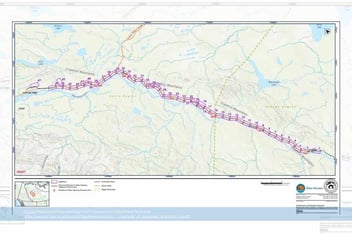
West Kitikmeot Resources Corp. is developing a 230-kilometre all-season road from the Nunavut border to a deepwater port and airfield at Grays Bay on the Coronation Gulf, on the Arctic Ocean. The project has an estimated value of approximately CAD 1.2 billion and was referred to the Major Projects Office on 12 March 2026.
An affiliate of the Kitikmeot Inuit Association, the Kitikmeot Corporation, is WKR's largest shareholder. ATCO Ltd. acquired a 40 per cent ownership stake in WKR in March 2026. On 24 June 2026, the Government of Canada initiated consultations on potential listing of the project as a project of national interest under the Building Canada Act.
Sources: Major Projects Office; West Kitikmeot Resources Corp., ATCO investment announcement, 23 March 2026; PM announcement, 12 March 2026
Overview
The project comprises three integrated components: a 230-kilometre gravel all-season road from the Nunavut border to the Arctic coast at Grays Bay, approximately 200 kilometres east of Kugluktuk; a deepwater port capable of accommodating vessels up to 240 metres in length with a 15-metre draft; and a 6,000-foot airstrip with potential for extension to 8,000 feet.
Together with the proposed Arctic Economic and Security Corridor, a separate approximately 400-kilometre road project through the Slave Geological Province in the Northwest Territories, the Grays Bay Road and Port would establish the first all-season road linking Nunavut to the National Highway System and the first overland connection between Arctic Ocean deepwater and the North American highway network.
The project would support the export of critical minerals, principally copper and zinc, from the West Kitikmeot region. Three prospective mining operations in the corridor have been identified by WKR: Glencore's Hackett River, and MMG's Izok and High Lake deposits, which together hold an estimated CAD 30 billion in in-situ mineral resources. WKR itself holds mineral exploration properties along the road corridor.
Sources: Major Projects Office; West Kitikmeot Resources Corp., ATCO investment announcement, 23 March 2026; PM announcement, 12 March 2026; Daily Commercial News, PDAC conference report, March 2026
Key Facts
| Category |
Information |
| Location |
Grays Bay, Coronation Gulf, Kitikmeot Region, Nunavut (approx. 200 km east of Kugluktuk) |
| Proponent |
West Kitikmeot Resources Corp. (Kitikmeot Corporation, a wholly-owned subsidiary of KIA, is largest shareholder; ATCO Ltd. holds 40 per cent) |
| Project type | Transportation infrastructure: road, port, airfield |
| Scale | 230 km all-season road; deepwater port (vessels to 240 m, 15 m draft); 6,000-ft airstrip (extendable to 8,000 ft) |
| Estimated value | Approximately CAD 1.2 billion |
| Status | Proposed; undergoing NIRB environmental assessment; being considered for Building Canada Act listing |
| Target completion | Full operations by 2035 |
| Indigenous involvement | Equity partnership (KIA affiliate is largest shareholder in WKR) |
Sources: Alto FAQ; Major Projects Office; Transport Canada, 12 December 2025; Parliament of Canada, Bill C-15 Royal Assent; Alto, economic benefits
Development
The project was first proposed by the Kitikmeot Inuit Association and the Government of Nunavut in 2016, with a federal funding application under the National Trade Corridors Fund submitted in 2017. The original cost estimate was CAD 550 million. The Government of Nunavut withdrew as co-proponent in 2018, leaving KIA as sole proponent.
In 2019, Canada entered into a CAD 21.6 million contribution agreement with KIA from the National Trade Corridors Fund to advance the project to shovel-ready status. The KIA resolved in late 2022 not to commit further funds and reaffirmed that position in January 2023. On 22 November 2023, a novation and assignment agreement among Canada, KIA and West Kitikmeot Gold Corporation, later renamed West Kitikmeot Resources Corp., transferred the proponent responsibilities and the NTCF contribution to WKR.
WKR was originally formed in 2014 as a mineral exploration company focused on Inuit Owned Lands in the Kitikmeot region. In February 2022, a group of investors with Northern and mining experience recapitalised the company.
In 2024, the Canada Infrastructure Bank provided a CAD 3 million loan to support project development, matching private funding. In March 2026, ATCO Ltd. acquired a 40 per cent ownership stake in WKR through a staged investment of approximately CAD 10 million. Since 2019, the federal government has committed approximately CAD 29 million to planning and development work, with an additional CAD 50 million conditionally approved in May 2026.
Sources: WKR, project page; Nunatsiaq News, project history; Nunatsiaq News, KIA withdrawal; ArcticToday, new proponent; Canada Infrastructure Bank; ATCO/WKR announcement; Northern Miner, July 2026
Development Stage (September 2026)
Status: Proposed; undergoing environmental assessment
- Impact statement filed with Nunavut Impact Review Board (11 volumes, more than 5,000 pages), 1 March 2026
- NIRB returned impact statement requesting additional information on wildlife impacts and public accessibility, March 2026; WKR preparing revised submission
- Referred to Major Projects Office, 12 March 2026
- ATCO Ltd. acquired 40 per cent ownership in WKR, 23 March 2026
- Up to CAD 50 million conditionally approved through the First and Last Mile Fund (NRCan) for planning and preconstruction work, 20 May 2026
- Government of Canada initiated consultations on potential listing under the Building Canada Act as a project of national interest, 24 June 2026; recommendation to Governor in Council expected by end of 2026
Sources: Major Projects Office; NIRB, project page; Nunatsiaq News, NIRB return; NRCan, 20 May 2026; Government of Canada, Building Canada Act announcement, 24 June 2026
Timeline
| Date |
Milestone |
| 2016 |
Toronto-Peterborough-Ottawa-Montreal-Laval-Trois-Rivieres-Quebec City |
| 2017 |
Approximately 1,000 kilometres |
| 2018 |
Alto (Crown corporation, subsidiary of VIA Rail) |
| 2019 |
Cadence consortium |
| February 2022 |
CAD 60 to 90 billion |
| Late 2022/January 2023 | CAD 3.9 billion over six years |
| 22 November 2023 |
Dedicated, electrified high-speed passenger rail; peak speeds of 300 km/h or more |
| October 2024 | More than 17 million people (figures of 17 to 18 million appear across sources) |
| 2024 |
Co-development phase (design, environmental assessment, consultation) |
| 1 March 2026 |
Transformative strategy, referred 11 September 2025 |
| 12 March 2026 |
Ottawa to Montreal (approximately 200 km) |
| March 2026 | 2029 or 2030 |
| 23 March 2026 |
More precise corridor alignment expected |
| 20 May 2026 |
Federal impact assessment process expected to commence |
| 24 June 2026 |
Construction start target (first segment, Ottawa to Montreal) |
| 2035 (target) | First segment operational |
Funding Summary
| Source |
Amount |
Purpose |
| NTCF contribution (2019, transferred to WKR 2023) |
CAD 21.6 million | Advance project to shovel-ready status |
| Canada Infrastructure Bank (2024) |
CAD 3 million | Project development loan, matching private funding |
| ATCO Ltd. (March 2026) |
Approx. CAD 10 million |
40 per cent equity in WKR |
| First and Last Mile Fund, NRCan (May 2026) |
Up to CAD 50 million (conditionally approved) | Planning and preconstruction |
Since 2019, the federal government has committed approximately CAD 29 million in total to planning and development. The overall project cost is estimated at approximately CAD 1.2 billion. WKR has indicated it expects the federal government to cover approximately 75 per cent of the construction cost, with the remainder from private investment. Construction is planned in multiple phases, with an expected in-service date of 2035.
Sources: NRCan, 20 May 2026; WKR, project page; Canada Infrastructure Bank; ATCO/WKR announcement; Northern Miner, July 2026; CBC News, December 2025
Regulatory Status
The project is undergoing an environmental assessment conducted by the Nunavut Impact Review Board pursuant to the Nunavut Land Claims Agreement and the Nunavut Planning and Project Assessment Act. WKR filed an impact statement integrating Inuit Knowledge, Community Knowledge, Indigenous Knowledge and western science across 11 volumes and more than 5,000 pages on 1 March 2026. NIRB returned the impact statement in March 2026, requesting additional detail on wildlife impacts and improvements to public accessibility of project information. WKR is preparing a revised submission.
On 24 June 2026, the Government of Canada initiated the process towards potential listing of the project as a project of national interest under the Building Canada Act. Consultations with Indigenous communities, the territorial government and federal permitting departments are to begin in the coming months, with a recommendation to the Governor in Council expected by the end of 2026. National interest listing would streamline multiple federal decision points into a single approval, contingent on successful completion of the treaty-based impact assessment and regulatory processes.
Sources: Major Projects Office; Government of Canada, 24 June 2026; Nunatsiaq News, NIRB return; WKR, impact statement page
Indigenous Participation
The project sits within the Kitikmeot Region of Nunavut, the traditional territory of Inuit communities in western Nunavut. The Kitikmeot Inuit Association is a democratically elected not-for-profit society representing the Inuit of the Kitikmeot Region. KIA has been involved in the development of the Grays Bay Road and Port since 2018 and maintains equity in WKR through its wholly-owned subsidiary, the Kitikmeot Corporation, which is WKR's largest shareholder. The Kitikmeot Corporation's president also serves as a director and co-chair of WKR.
The project was originally proposed jointly by the KIA and the Government of Nunavut in 2016. Following the Government of Nunavut's withdrawal in 2018 and the KIA's decision in late 2022 not to commit further funds, West Kitikmeot Gold Corporation, now West Kitikmeot Resources Corp., assumed the proponent role in November 2023 through a novation and assignment agreement with Canada and KIA. WKR describes itself as Inuit owned and led.
In March 2026, ATCO Ltd. acquired a 40 per cent ownership stake in WKR, making the corporate structure a partnership between Inuit interests, through Kitikmeot Corporation, and a private-sector investor. The Major Projects Office describes the project as being delivered through West Kitikmeot Resources Corporation, a partnership between the Kitikmeot Inuit Association and private investors.
Community engagement and consultation processes are ongoing. The NIRB environmental assessment includes Inuit Knowledge, Community Knowledge and Indigenous Knowledge alongside western science.
Sources: Major Projects Office; Kitikmeot Corporation, WKR page; WKR, About page; WKR, Building Canada Act announcement; Nunatsiaq News, KIA withdrawal; ArcticToday, new proponent; ATCO/WKR announcement
Project Components
Road
A 230-kilometre gravel all-season road from the Nunavut border to the Arctic coast at Grays Bay. The road connects at its southern terminus near the former Jericho diamond mine, at the northern end of the Tibbitt to Contwoyto winter road. Connection to the existing highway network and the Slave Geological Province would require the separate Arctic Economic and Security Corridor project, a proposed approximately 400-kilometre road through the Northwest Territories.
Port
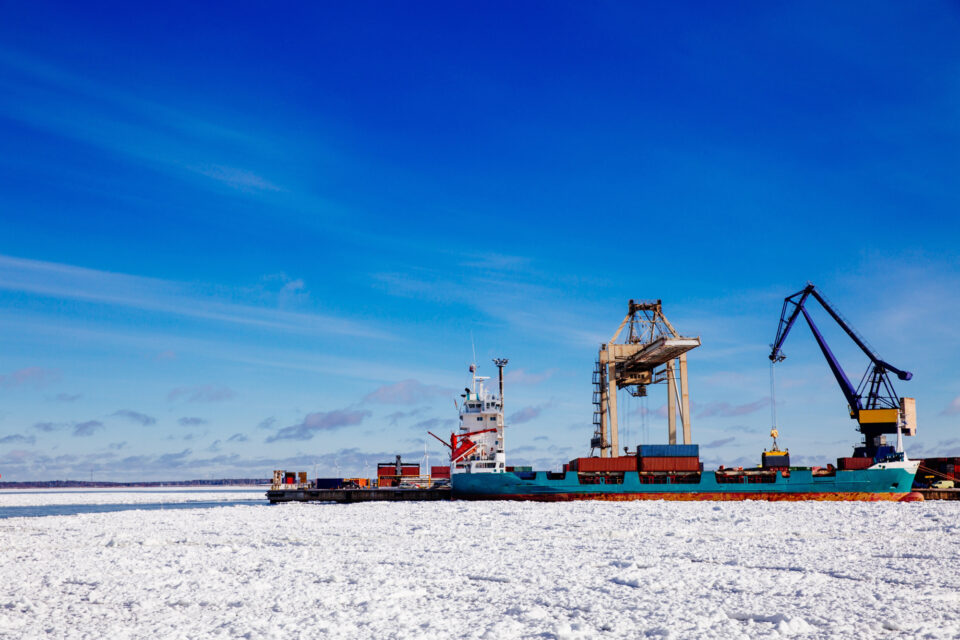
A deepwater port at Grays Bay on the Coronation Gulf, approximately 200 kilometres east of Kugluktuk. Once constructed, the port would sit roughly halfway between the ports of Nome, Alaska and Nuuk, Greenland, on the Northwest Passage. The port is designed to accommodate vessels up to 240 metres in length with a 15-metre draft, including 100,000-dwt ore carriers. Proposed facilities include two large deepwater wharves capable of accommodating ore carriers, polar icebreakers, offshore patrol ships and patrol submarines; one medium-vessel wharf; two barge landing areas with roll-on, roll-off capability; a small craft harbour with boat launch; fuel storage and handling facilities; year-round accommodation for 80 persons; and seasonal barracks-style accommodation for an additional 150 persons. The port would have dual-use civilian and military potential, subject to further assessment by National Defence.
Airfield
A 6,000-foot airstrip with potential for extension to 8,000 feet, designed for both civilian resupply operations and military use.
Sources: Daily Commercial News, PDAC conference report, March 2026; WKR, ATCO announcement; Major Projects Office; PM announcement, 12 March 2026; Arctic Security Corridor
Sources
- Major Projects Office, Grays Bay Road and Port
- Prime Minister of Canada, Northern plan announcement, 12 March 2026
- Natural Resources Canada, First and Last Mile Fund announcement, 20 May 2026
- Government of Canada, Building Canada Act announcement, 24 June 2026
- West Kitikmeot Resources Corp., ATCO investment announcement, 23 March 2026
- West Kitikmeot Resources Corp., Building Canada Act announcement, 24 June 2026
- West Kitikmeot Resources Corp., impact statement filing, 1 March 2026
- West Kitikmeot Resources Corp., impact statement page
- West Kitikmeot Resources Corp., project proposal filing, October 2024
- West Kitikmeot Resources Corp., GBRP project page
- West Kitikmeot Resources Corp., About page
- Kitikmeot Corporation, WKR page
- Canada Infrastructure Bank, Grays Bay project page
- Nunavut Impact Review Board, project file
- Nunatsiaq News, NIRB returns impact statement, 19 March 2026
- Nunatsiaq News, KIA withdrawal
- Nunatsiaq News, project history and 2035 target
- ArcticToday, new proponent, December 2023
- CBC News, ATCO 40 per cent stake, 24 March 2026
- Daily Commercial News, PDAC conference report, March 2026
- Northern Miner, July 2026
- Arctic Security Corridor, Port of Grays Bay
- Osler, Hoskin and Harcourt LLP, WKR deal page